Vincere Tax: Multi-Tenant Tax & Financial Services Platform
A white-label platform on Bubble.io and Supabase where partner advisory firms get their own branded space to serve clients, with role-based access, document e-signing, invoicing, CRM, and messaging.
- Bubble.io
- Supabase
- HelloSign
- Stripe
- Monday.com
- API integrations
Overview
Vincere Tax needed one platform to connect three groups of people: its own team, the independent advisory firms it partners with, and those firms’ clients. I built it from scratch, working closely with the company’s founder.
It works like a white-label product. Each advisory firm gets its own branded space to manage its client relationships, while Vincere Tax runs the underlying infrastructure and services.
The stack
- Bubble.io for the interface and workflow logic.
- Supabase for the backend: a PostgreSQL database, authentication, and file storage for documents and company logos.
- HelloSign for document signing.
- Stripe for invoices and payments.
Supabase provides enterprise-grade security and scalability on the backend, while Bubble.io keeps the interface fast to build and change.
Multiple roles, one platform
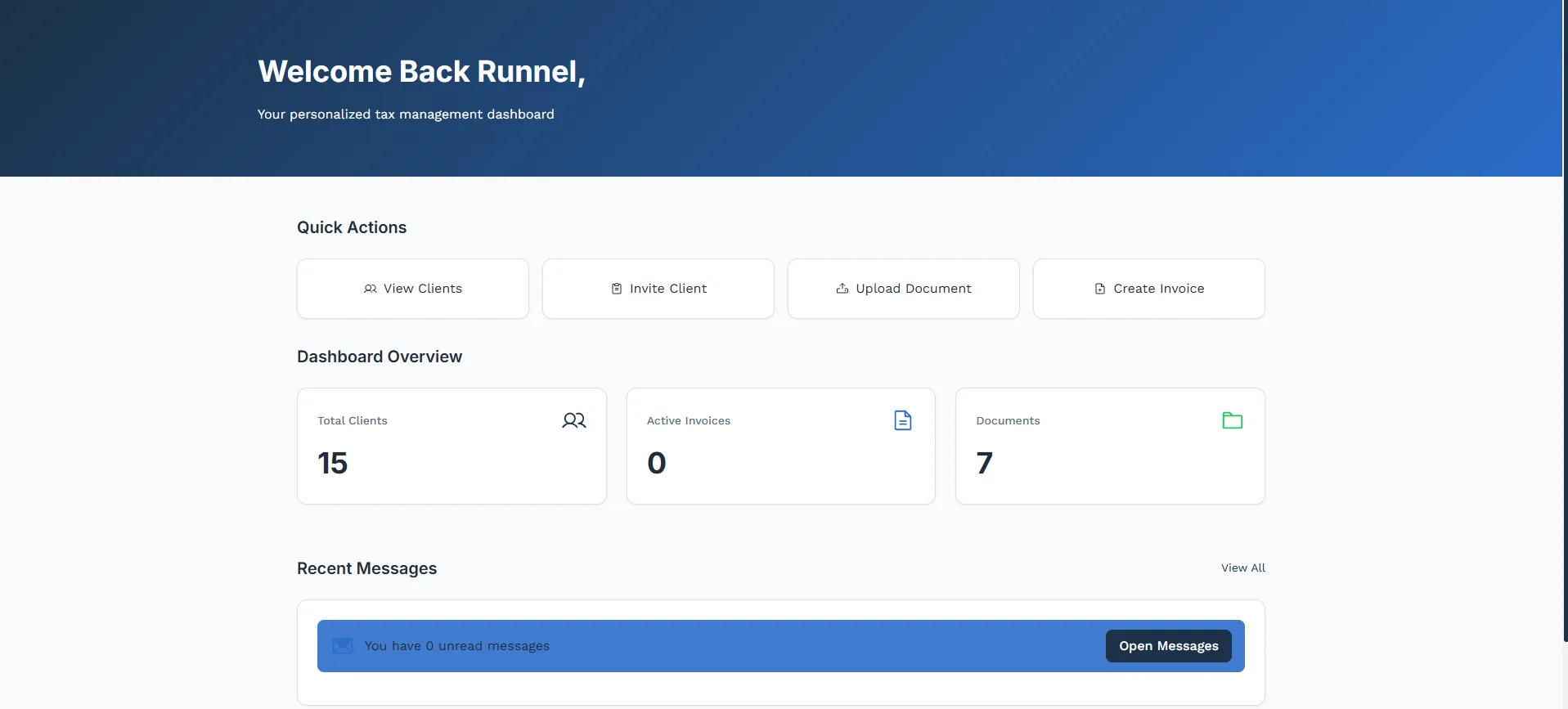
The platform has multiple user roles, covering the Vincere Tax team, partner advisory firms and their staff, and end clients. Each role has its own dashboard and permissions.
Roles are assigned automatically at sign-up. The system reads the new user’s email domain to place them in the right company and role, and sets up a company profile when a new firm joins.
Branded company profiles
Each advisory firm has a company profile tied to its email domain. Firm administrators upload their logo (stored in Supabase Storage) and set their company colors, so the client portal carries their own branding.
Documents and e-signatures
Document management is a major part of the platform:
- Upload and organization: documents are attached to specific clients, stored in Supabase Storage behind security policies, and tracked with metadata such as file name, owner, client, and upload date.
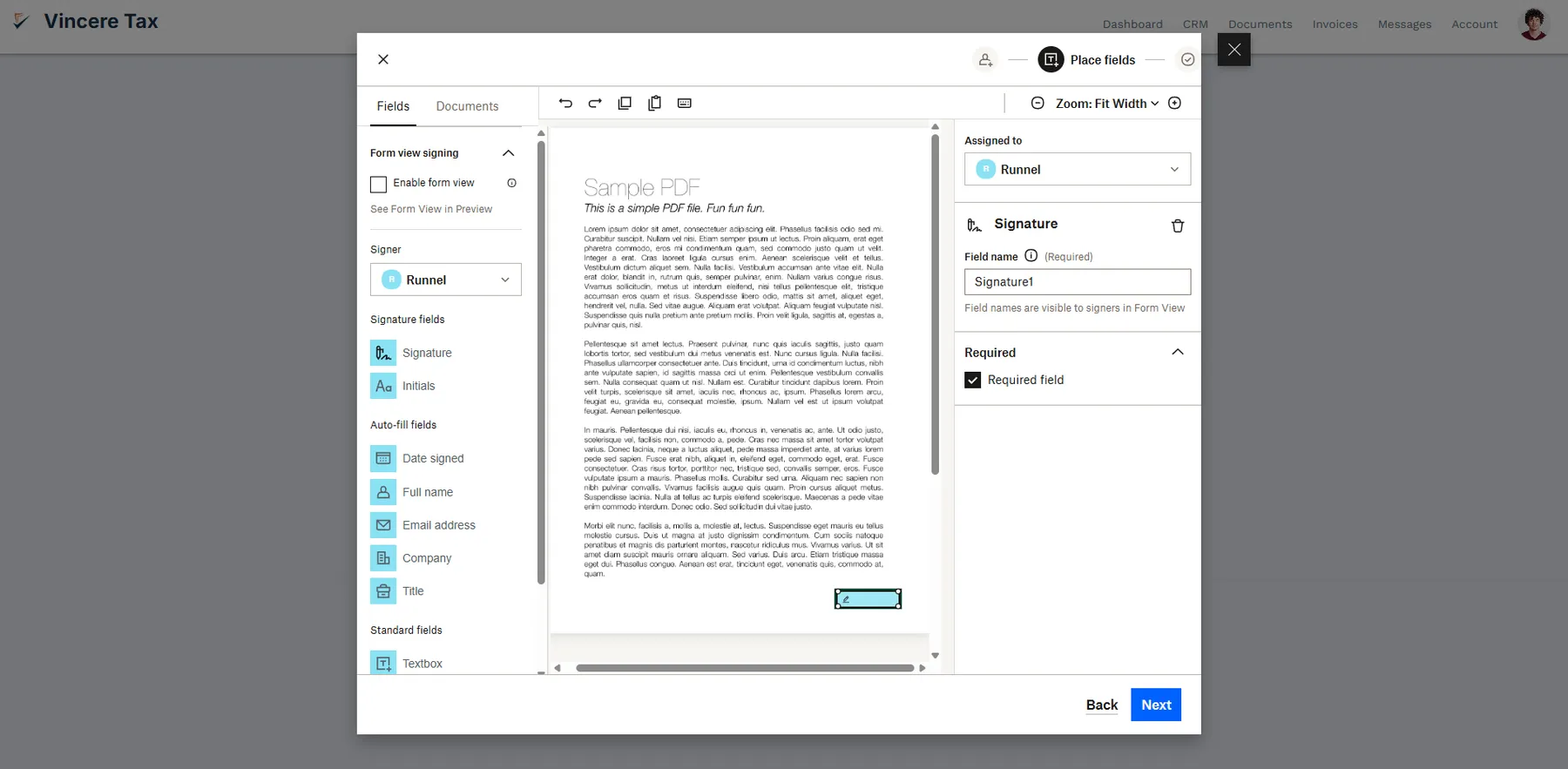
- E-signature workflow: the team uploads a document, places signature fields in HelloSign’s embedded editor, and sends it to the client to sign. The platform tracks each request’s status (pending, signed, or declined) along with HelloSign’s request and signer details.
Client assignment and data isolation
Advisors are assigned to specific clients, and when they log in they see only those clients and their documents. This filtering happens in the database itself, not just in the interface.
Also on the platform
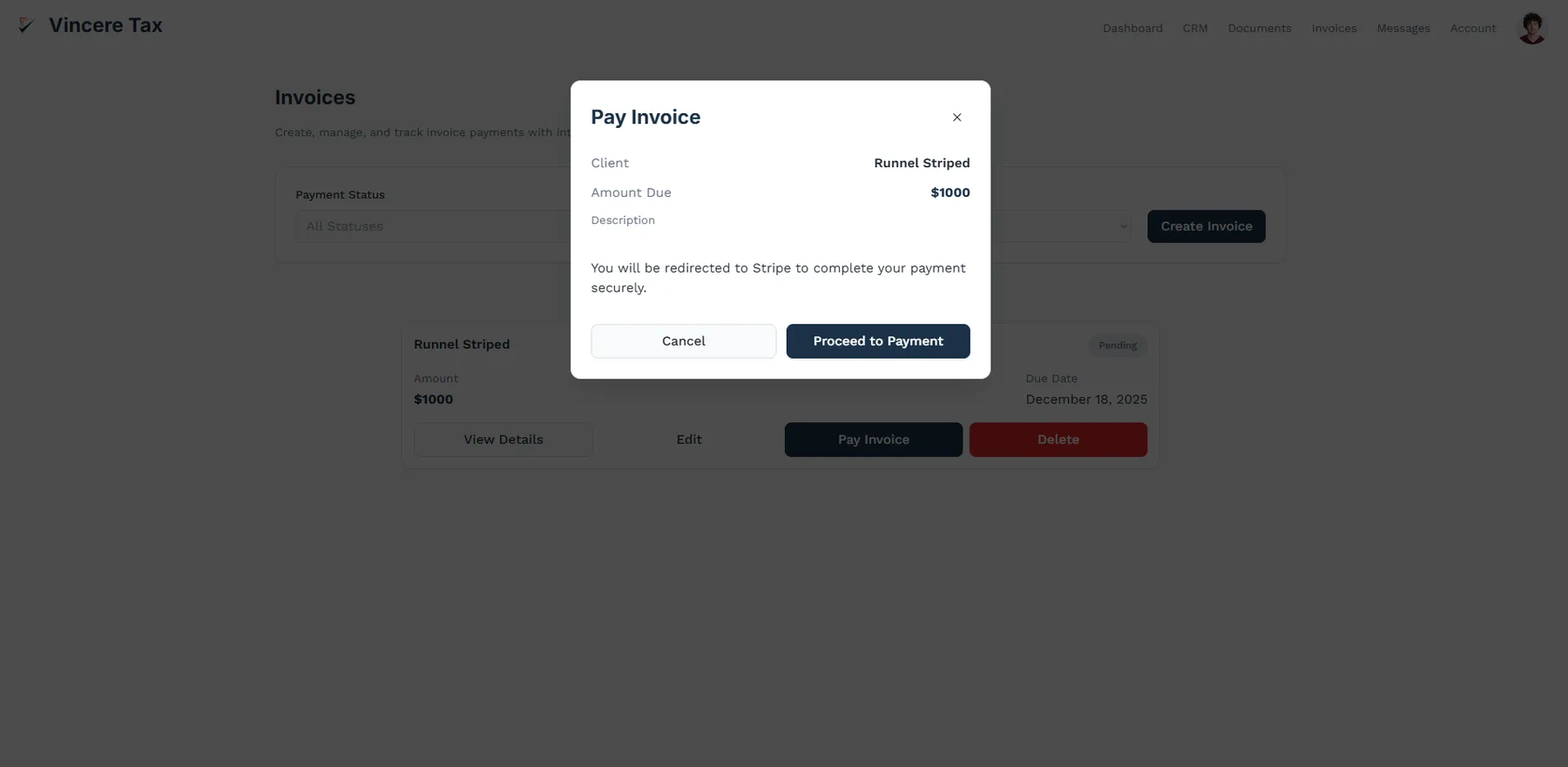
- Invoicing with Stripe: create invoices and let clients pay them securely.
- CRM for managing client relationships.
- Messaging built into the platform.
- Onboarding forms.
- A settings page.
Security first
The platform’s main security layer is PostgreSQL Row Level Security (RLS) in Supabase. Every table has policies defining who can read, insert, update, or delete each record, so even someone manipulating the frontend can’t reach data they aren’t authorized to see. Bubble’s conditional navigation improves the experience, but it never stands in for backend security.
The sign-up flow ties it together:
- A user signs up in Bubble, which triggers Supabase authentication.
- Supabase creates their authentication record.
- A database trigger creates their matching user profile.
- Their role is assigned automatically.
- Every request after that is checked against the RLS policies.
Authentication data is kept separate from user profiles, foreign keys protect the relationships between users, companies, clients, and documents, and database triggers keep related records in sync.
Problems solved along the way
- Keeping form data through email verification. Bubble’s verification redirect made earlier form data unavailable in later workflow steps, so I carried it through the multi-step workflow with custom states.
- Case-sensitive emails. PostgreSQL matches emails case-sensitively, so every email is lowercased before it touches the database.
- Triggers that respect security. Profile creation runs as Supabase functions and triggers, written carefully around foreign key constraints and RLS policies.
- Plugin limits. Supabase’s native Bubble plugin handles the straightforward operations, and the API Connector calls Supabase directly for complex queries and wherever the plugin’s limits on exposing data got in the way.